
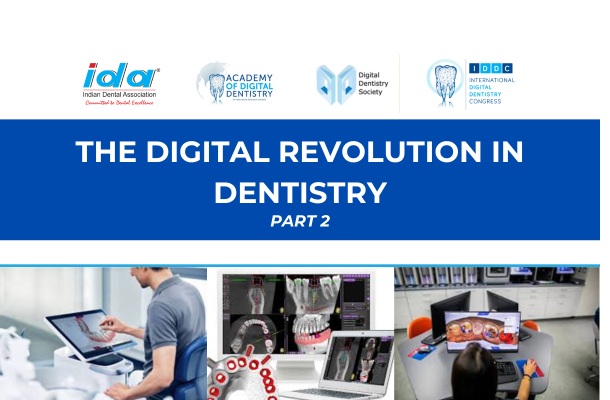
The introduction of digital technologies has caused a revolutionary change in the dental industry in recent years. The paradigm of "digital dentistry," which uses computer-aided tools to improve dental procedures, has completely altered how dentists diagnose, plan, and treat patients. This blog post delves into the definition, benefits, and evolution of digital dentistry, illuminating its diverse applications across the dental field.
Digital Implant Dentistry:
This technique uses a 3D computer simulation for checking the position of bone and nerve. Digital implant dentistry uses the tiniest incision, giving you less pain than the pain experienced during traditional implant surgery. By using 3D technology, implants can be made according to bone size. They do not require any unnecessary bone cuttings or sutures. This surgery is performed by computer stimulation and minimal incision, and it gives less pain with guided splints.
Guided Endodontics:
In digital dentistry, guided endodontics transforms root canal procedures using advanced technology, including CAD/CAM systems, 3D imaging, and virtual treatment planning. Intraoral scanners and CBCT aid in creating precise digital tooth models for accurate assessments. Guided endodontics employs advanced software to optimize instrumentation and irrigation, improving procedural efficiency and success rates. This innovation enhances predictability and elevates patient experiences in endodontics.
Advantages of Digital Dentistry
1. Patient Engagement:
Presenting the final treatment result before commencement allows for dialogue with patients, incorporating their expectations into the treatment plan.
2. More Accurate Treatment Planning:
Digital precision minimizes errors in treatment planning, ensuring better outcomes, especially in occlusion recording.
3. Time-Saving:
Quicker impressions and single-visit treatments reduce chair time for patients, while digital technologies expedite processes for dental labs.
4. Space-Saving:
Digital impressions eliminate the need for physical models, freeing up space in clinics that can be repurposed for other uses.
5. Cost-Effectiveness:
Savings on impression materials and transportation contribute to cost-effectiveness for both dentists and patients.
6. No More Gag Reflex:
Digital impressions spare patients the discomfort associated with traditional impression methods.
7. Openness:
Data compatibility allows for flexibility, with 3D data easily transferable across various systems, promoting independence among dental specialists and patients.
8. Entertainment in Pediatric Dentistry:
Digital pediatric dentistry transforms dental procedures into interactive experiences for children, alleviating stress through 3D visualization.
As we traverse the digital landscape of dentistry, it becomes evident that technology is not just enhancing clinical processes but also fostering a patient-centric approach. The advantages of digital dentistry extend beyond efficiency to encompass improved patient experiences and outcomes, marking a new era in oral healthcare. Embracing these technological advancements ensures that the future of dentistry remains bright and patient-focused.